
When Algorithm Speaks for Brands : Can Authenticity
Survive The Age Of AI?
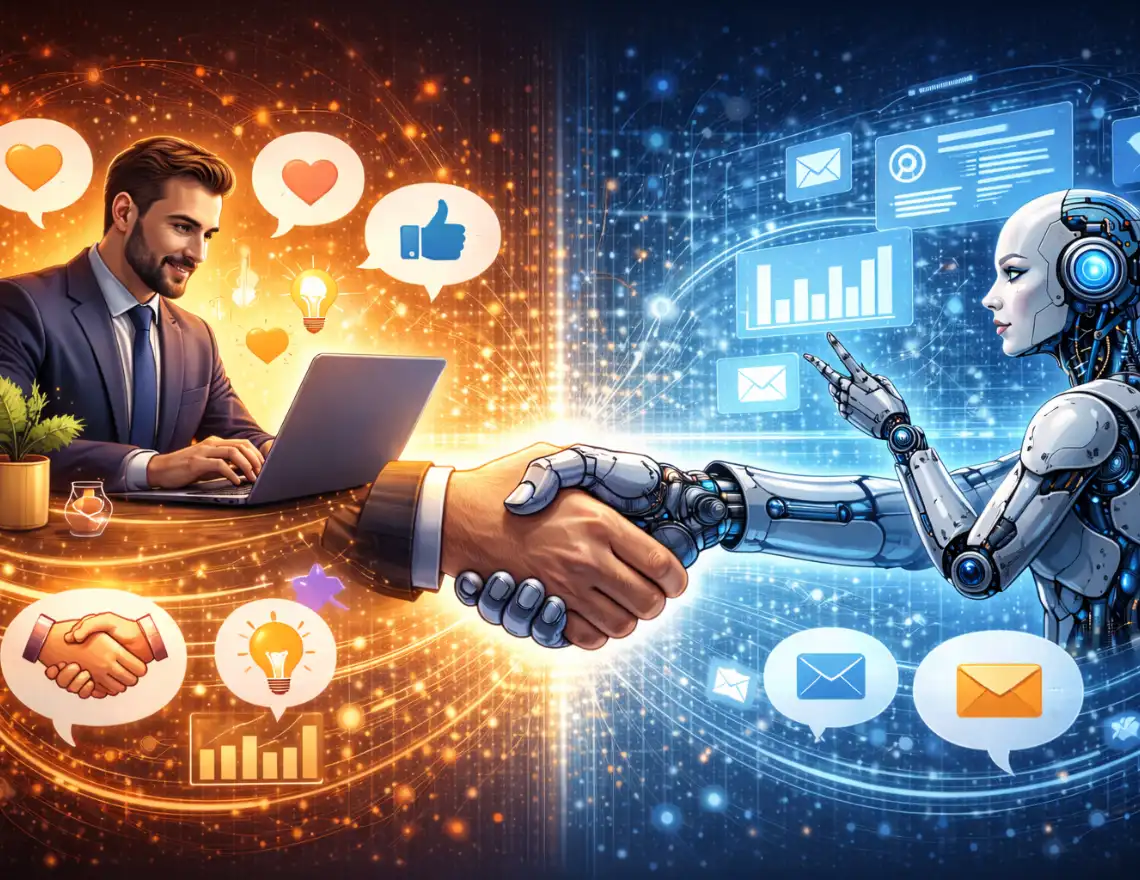
In the past few years, smart computer programs (called AI) have changed how brands talk to people. Brands now use AI to:
- Study what people like
- Guess what trends will be popular
- Send personalized messages
- Recommend products
- Reply quickly to customers
AI helps companies talk to lots of people at the same time. It can do this super fast. This makes customers feel noticed and helps businesses sell more. That sounds great right? But here’s the tricky part. When a computer writes the messages, people might start to wonder: “Is this brand really talking to me?” or “Is this just something a machine made? ”. If everything is created by algorithms, it might not feel as real or honest. People needs authenticity in AI, and people care about that.
Even the best freelance digital marketer in malappuram knows that if everything is created by algorithms, it might not feel as real or honest. People need authenticity in AI, and people care about that.
They want to know that a brand truly believes what it says. They want messages that reflect real values—not just smart computer predictions. So brands now have a challenge: How do they use AI to be fast and efficient? without losing the human touch? The key is balance. AI can help brands work smarter and faster. But humans still need to guide the message, make decisions, and ensure the brand stays true to its values. Because in the end, people don’t just want smart messages.They want real ones.
AI is really good at making things faster and easier. It can:
- Reply to messages quickly
- Help write posts
- Organize information
- Study what customers are saying
This helps brands save time. But here’s the problem. If everything is done by a computer, it can start to feel cold and impersonal—like you’re talking to a robot instead of a real person. And most people don’t like that. People like feeling heard. They like feeling understood. They like knowing someone actually cares. So brands need to keep a human touch. That means real people should still be involved.
For example, AI can read thousands of customer comments and notice that many people are upset about the same issue. But then a real person can step in and write a thoughtful response that shows understanding and empathy. AI gathers the information. Humans add the heart. When brands use AI to help—but not replace—human connection, they can be both efficient and authentic. This helps to build authenticity in AI because feeling understood is powerful.
Some brands have learned how to use AI wisely—without losing the human touch that makes people trust them. Take a large retail brand, for example. They used AI to better understand their customers. The system analyzed things like what people were buying which emails they were opening, and what products they were clicking on. With those insights, the brand was able to send emails tailored to each person’s interests. The result? More people opened the emails. More customers felt like the brand “got them.
But here’s what really mattered: even though AI helped decide what to send, real people shaped how it was said. The tone, the wording, and the personality—all of that still reflected the company’s core values. So the emails didn’t feel robotic or generic. They felt relevant. Thoughtful. Intentional.
Here’s another example. A tech company introduced AI chatbots to handle simple customer questions—things like, “What are your business hours?” or “Where’s my order?” The chatbot could respond instantly which customers appreciated. But when someone had a more complicated issue, the conversation was handed off to a real human representative. That balance made all the difference. Customers received fast answers when possible but they also got real empathy and problem-solving when it mattered most. The experience stayed efficient without feeling impersonal.
These examples highlight something important: AI doesn’t have to replace people. It can support them. When brands use AI for speed, organization, and insights—and rely on humans for empathy, judgment, and connection, they protect their authenticity. Used thoughtfully, AI doesn’t make brands feel fake. In fact, it can help them connect in smarter, more meaningful ways.
As technology keeps advancing, the connection between AI and brand authenticity is only going to get more complicated. We’re already seeing new trends emerge, like virtual influencers, AI-generated videos, and fully automated content. These innovations are exciting, but they also blur the lines. When a digital avatar promotes a product, or when content is created entirely by algorithms, it raises an important question: what does “real” even mean anymore? That’s where brands need to be thoughtful.
If companies rush into every new AI trend without considering how it affects trust, they risk confusing or even alienating their audience. People don’t just want innovation. They want honesty. They want to know who (or what) they’re engaging with. Transparency will matter more than ever. If AI is being used, say so. If content is automated, be open about it. When brands communicate clearly about how and why they’re using technology, it strengthens trust instead of weakening it.
Looking ahead, the brands that succeed won’t be the ones that choose between AI and authenticity. They’ll be the ones that blend both intelligently. They’ll use AI to understand their audiences better, spotting patterns, learning preferences, and identifying needs. But they’ll pair those insights with genuine storytelling, real values, and a consistent human voice. In an increasingly automated world, meaningful connection will become even more valuable. Technology may power communication. But authenticity will always power relationships. And the companies that remember who embrace innovation without sacrificing integrity will be the ones that build lasting loyalty in the years to come.
According to a Forbes article on AI in branding, brands that focus on genuine human connection build stronger loyalty than those relying only on algorithms.